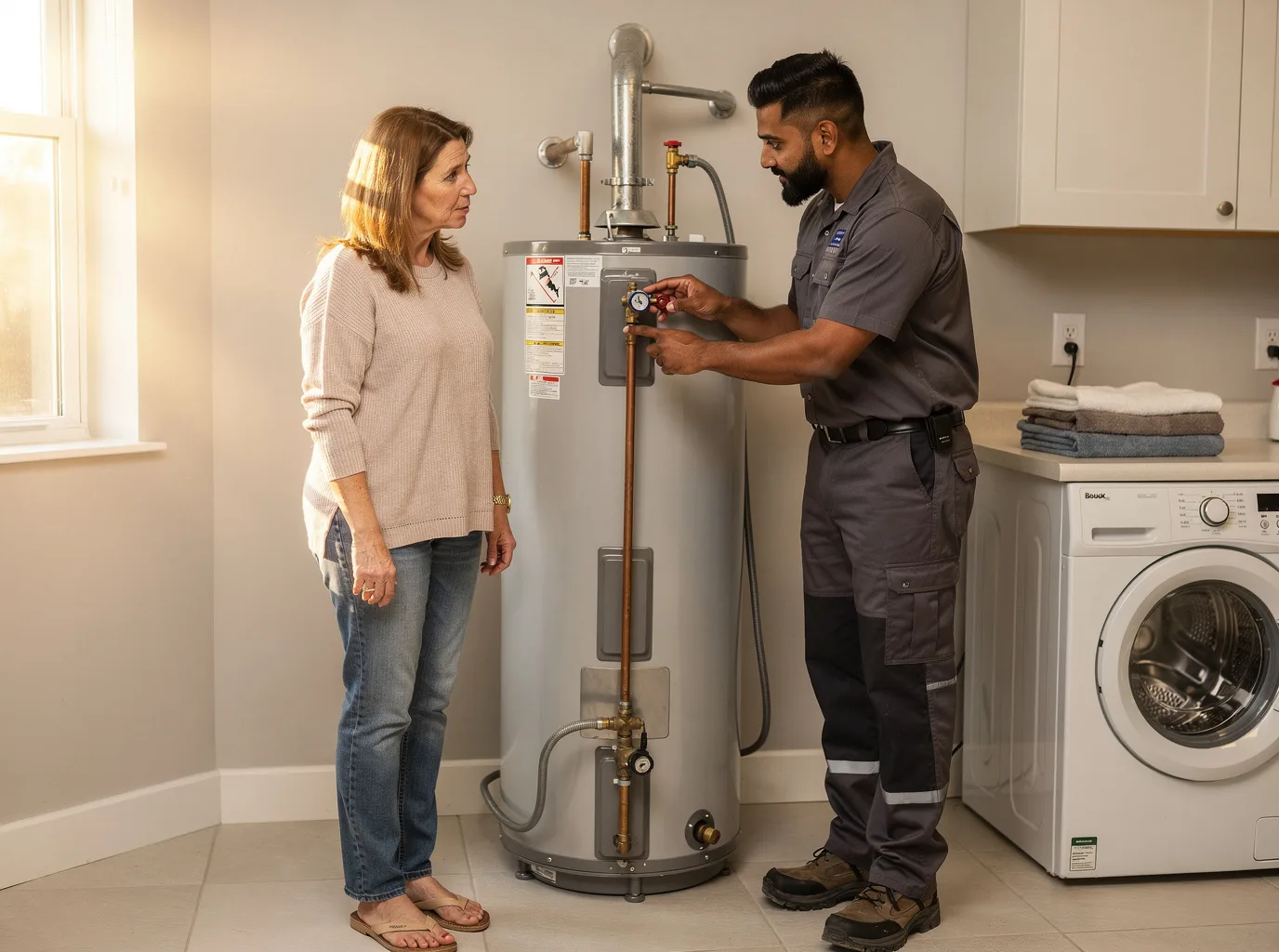
Replacing a water heater on your schedule is easier than replacing it on a January morning with water on the floor. If your tank is past about ten years, or the date on the label has worn off, early fall is a sensible time to plan the swap.
How to tell it is time
- Water seeping from the tank body or rust around the base
- Rust-colored hot water while the cold water runs clear
- Repairs needed more than once in a season
- The unit is past the typical eight-to-twelve-year range for tank heaters
Choosing the replacement
Most homes go with the same fuel and a similar size, often 40 or 50 gallons for a family. Before buying, check the first-hour rating, which tells you how much hot water the tank can supply in a busy hour. Other options worth discussing:
- High-efficiency gas models with power venting
- Heat pump water heaters, which use far less electricity but need space and cool the room around them
- Tankless units, for homes that want endless hot water and can supply the gas or electrical load
Code items on replacement
Many jurisdictions require a permit for a water heater swap. Depending on location, the new unit may need an expansion tank, seismic straps, a drain pan, or updated venting. The plumber removes the old tank and connects the new one, then checks the relief valve and gas or electrical connections.
We book water heater replacements with local plumbers in Java Center, NY.